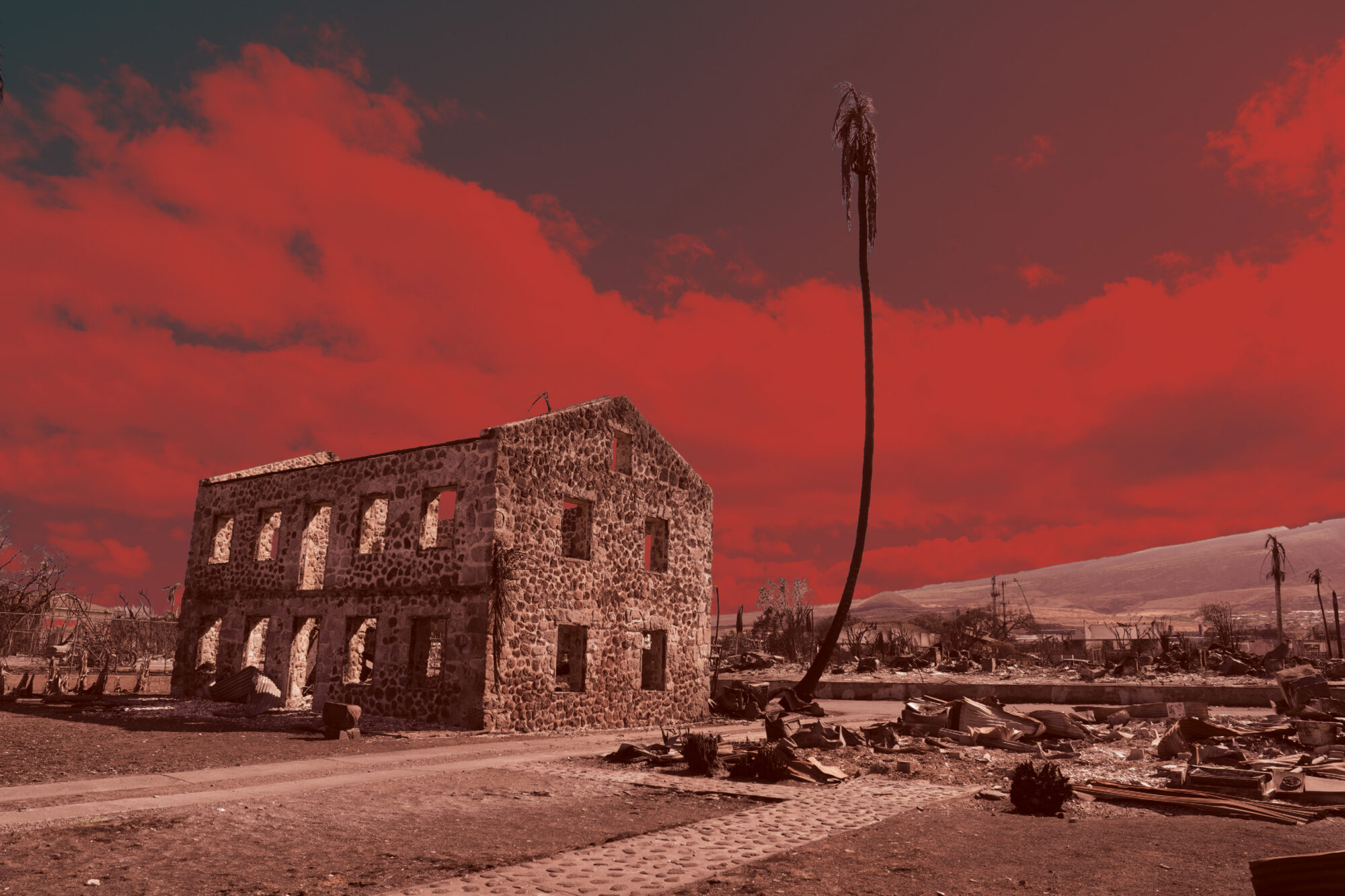

Imagine, if you will, the effort it takes to rebuild an entire community, literally from the ground up, after a catastrophic event, such as a flood, earthquake, or wildfire. Using your imagination in this way is no great stretch in these times because natural disasters seem to be occurring at a quickening pace, everywhere. In the past ten years, many communities have faced unbelievable Acts of God, yet the indomitable will of the victims continues to prevail, much like ants steadily reassembling their home after the boot comes down and destroys their pile. (As I write this, coastal Washington and Oregon are experiencing massive flooding.)
Now consider the plight of the individual homeowner or family after the flood or wildfire, tsunami, or hurricane. They’ve just lost everything they own. If they are lucky, their family is intact. Sadly, many of these people have lost family members as well as their worldly possessions. And now, after losing everything, they find themselves facing a series of challenges that can seem insurmountable. Their property must be cleaned of debris. Their utilities must be reestablished. They are forced to seek and secure a construction loan to rebuild their house. They need a survey, both to reestablish their boundaries and to capture the post-clean-up topography. They must secure the services of an architect, find house plans that give them what they need while staying within a budget defined by the limits of the loan. They involuntarily receive a crash course in thinking in terms of ‘cost per square foot’ when all they want is the home they used to have. After coming to grips with the fact that they likely cannot have as much house as they want, then paying an architect to design what they can realistically afford, they hurry to get the completed plans submitted to the local agency for review and approval. Then, after all that, these exhausted people, bereft of possessions, and down to the dregs of their financial resources, must wait while contractors, whose services have become extremely precious after the disaster, get round to building their new home. This can be a seven or eight-year process that can leave desperate families financially and spiritually drained.
When this is the reality facing every family in a community, there must be something, some agency, organization, or non-profit entity, that binds these people together and strives to help with the rebuilding process. It won’t be FEMA. The Federal Emergency Management Agency has a part to play, that is certain. But FEMA’s remit is typically limited to immediate relief — food shelter, temporary financial aid, temporary housing and maybe some trailers for temporary schools. In some instances, FEMA takes the lead in the cleanup. But then they are gone, moved on to the next disaster. Okay then, what about the state, county, or local government? Insufficient budgets and manpower and plenty of bureaucratic red tape are the norm.
Now, put this familiar story of destruction and reconstruction on an Island, far from the mainland and all its resources. Even more challenges to face including limited resources and limited manpower. Let’s take a look at the rebuilding process unfolding in the oceanside town of Lahaina on the beautiful island of Maui, after a devastating wildfire in August of 2023 obliterated the town. How is it going some two and a half years later?
Lahaina — Disaster and Recovery
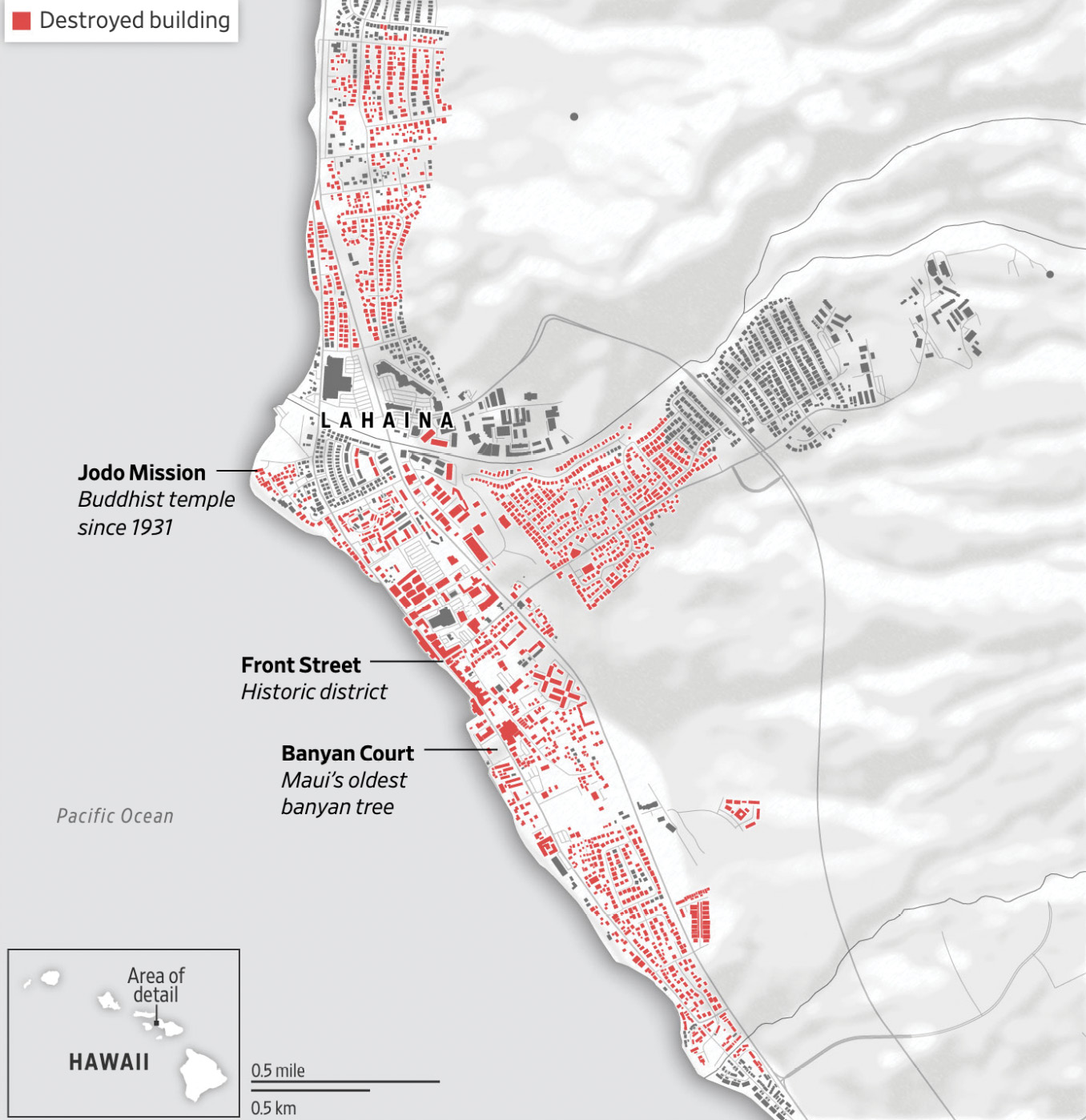
The colorful and historic town of Lahaina, on the beautiful island of Maui, caught flat-footed, was virtually unprepared the conflagration that wiped out a huge part of the town. The hills above town were (and still are) covered with native grasses that years of drought have left dangerously dry.
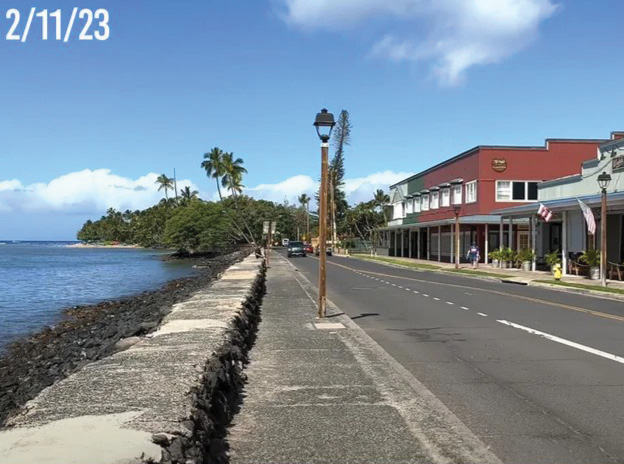

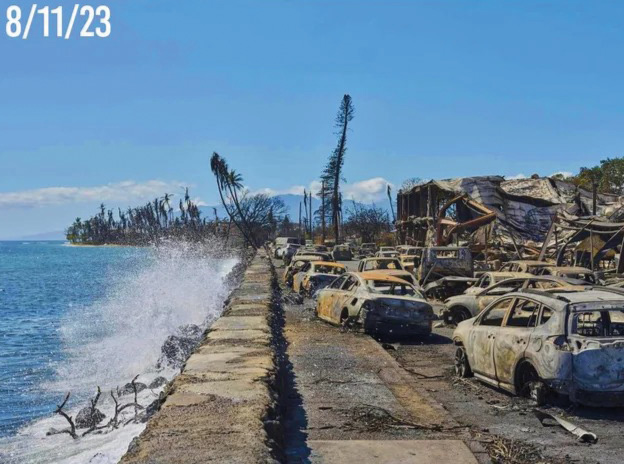
Town of Lahaina before and after.
During the fire, the water lines ran dry. Consequently, the town did not have sufficient capacity to extinguish such a blaze. It should be noted that this condition was the sad but inevitable result of decades, perhaps generations of fights over control of the water resources, between the heirs of the wealthy plantation owners, the resorts, and the towns along the west side of Maui. It is a story that westerners are all too familiar with. As Mark Twain, who was a huge fan of Maui, once said, “Whiskey is for drinking; water is for fighting over.” And apparently for dying over, as well.

Some of the potential escape routes, once the fire got down into the heart of town, were blocked off by locked gates, and others, narrow streets, were cut off by the fire, and these issues caused traffic jams and fatalities, as victims burned to death in their cars. At the seaside, some victims had no choice but to dive into the ocean and try to stay afloat, some for up to six hours.
In short, Lahaina was a town without a plan. In some ways it now serves as a poster child for unpreparedness. But is your town any more prepared than Lahaina was? Other communities should take heed of this and the plentiful other unfortunate examples out there and get started developing disaster preparedness plans.
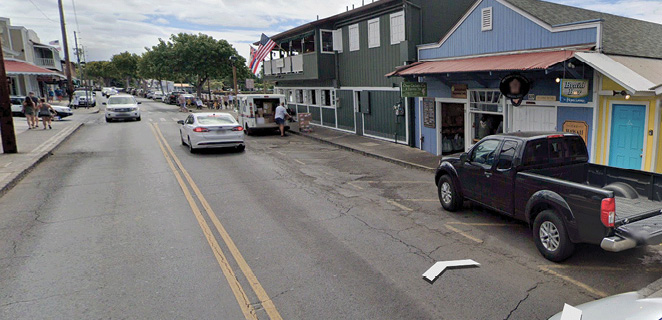

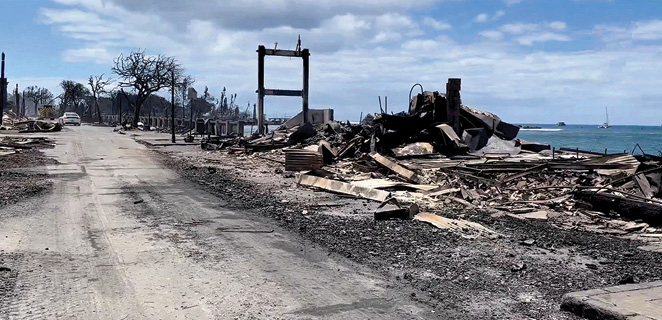
Lahaina’s Front Steet, before and after
Help for Lahaina Arrives
Before the Lahaina fire of August 8, 2023, Hawai’i Community Lending (HCL), a non-profit organization, had specialized in finding home loans across all the islands for native Hawaiians who did not qualify for a conventional loan. As an affiliate of Hawai’i Community Assets, HCL has solid and flexible financial resources. They have helped many native families secure home loans and get into homes.

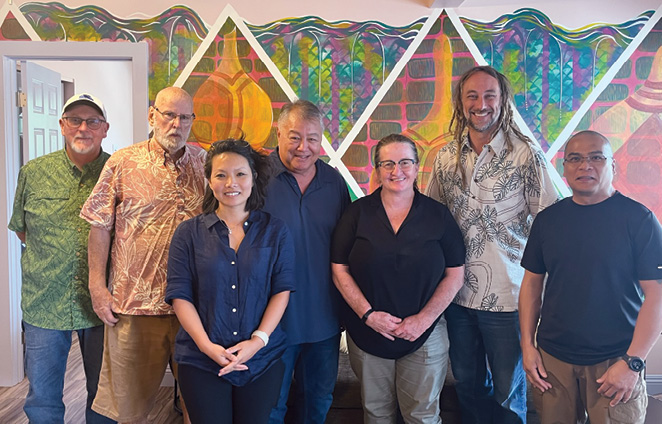
HCL Strategy Team
After the fire, HCL and their Executive Director, Jeff Gilbreath and a small team of advisors pondered how to help the most vulnerable fire victims, whether they were native or not, and they hit upon a strategy that could help many people, right away.
Reverse engineering the rebuilding process, they concluded the following: to get a new rebuilt home completed and a certificate of occupancy issued, you need building plans prepared and submitted for review, for that you need an architect, the architect will need a current boundary and topographic survey. So, the team deduced that the fundamental first step across most if not all recovery parcels, would be a survey. Gilbreath, thinking ‘big picture’ went out and shook some trees and secured a three million dollar grant to pay for all the residential surveys in Lahaina, not just the clients they would represent.

HCL Lahaina — Loan Advisors
As the scope and scale of the assistance needed continued to grow, it was clear that HCL would have to be involved in many aspects of their clients’ overall rebuilding process. They had counselling staff working with the victims to determine what they could afford and how they secure a loan. That very stressful job — day after day listening to the plights of the victims, trying not to send them away disappointed, leads to inevitable burn out and during a conversation with the assembled team of loan advisors in October, they said the average time before they had to take time off or wash out entirely was about six months. These people are heroes!
The HCL team to includes a knowledgeable construction manager, a GIS specialist, and a longtime Maui surveyor. They reached out to the other non-profits operating various functions and pulled them all together into a loose confederation. HCL put together a Request for Proposal (RFP) for surveys of the first 60 of their clients’ properties and disseminated it among all Hawaiian survey firms. They selected three firms and divided up the 60+ properties among them. The three firms have completed their assignments, and an additional 25 lots have been distributed to the three participating firms, with another 50+ owners expressing interest in joining the program for a free survey. As of the end of October, 157 total surveys have been completed and submitted for payment or reimbursement.
Taking a step back for a minute, the cleanup, which was delayed for some months by the need for survivors to have time to pick through the remains for any mementos, was handled by the only entity that was large enough to tackle the project — the US Army Corps of Engineers. Due in part to constant contact between the Governor’s office and USACE and the relentless lobbying of two state officials, Craig Clouet the head of GIS for the State and Meyer Cummins of the State Surveyor’s Office, USACE did the unthinkable and took the existence of lot corners into account while removing thousands of tons of toxic burn debris from Lahaina. The result of that consideration by USACE is that surveyors are reporting that 80-90% of lot corners survived the fire and the cleanup.
Meanwhile the GIS people are building an internal database, with plans to make it public-facing and eventually to turn it over to Maui County. The database will take every subject parcel and identify and link to, the current vesting deed, a new title report, the status of the survey, and a pdf copy of the survey plat, once the survey is completed. The database will also log status of building plans, status of permit review/approval, status of construction and issuance of certificate of occupancy. Parcels done by others are also being tracked, and surveys done by others which are not part of the plan can be reimbursed out of the original grant money. This public-facing GIS portal will serve as a source of hope and inspiration through the long recovery process.
A Long Road to Recovery
HCL will be helping their clients navigate the challenges of getting a survey, getting a home loan, securing a building plan, navigating the review process, and getting their new home construction underway. This has required thinking far outside the box for a small community lender, and HCL anticipates being involved in the actual homebuilding process too, out of sheer necessity. Their construction manager is working on various ideas involving unconventional building methods and materials in an attempt to ramp up an operation that can build roughly nine or ten homes per month or one hundred houses a year. In order to keep costs down, a mix of contractors and volunteer labor will be needed to complete the construction. With five hundred and forty-four families already on HCLS’s client list, this extremely ambitious planned program still means an over five-year wait for some, which equates to seven-to-eight years after the fire.
Now that the cleanup phase is over and the scope and scale of the task of rebuilding is becoming clear, the real work can begin. The people of Lahaina have a huge task in front of them, recovering from such utter disaster and doing so with much volunteer labor assistance and non-profit financial aid. The work that Hawai’i Community Lending Foundation, Red Lightning, Samaritan’s Purse, and others are doing is truly inspiring! The people will recover, the town will recover and life will go on. Lahaina will return, and good times will be had again along Front Street. Bet on it!
For more about the Lahaina fire see https://amerisurv.com/2025/03/06/rising-from-the-ashes.