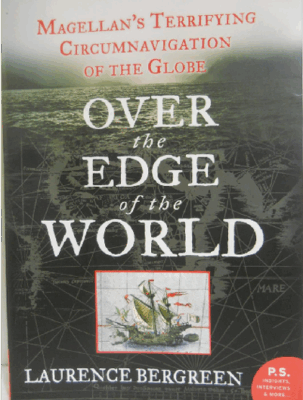

If there is, it’s a small one. There aren’t enough surveyors in the US, or the world, to send a compelling book about our area of interest up the bestsellers’ charts, that much is certain. However, Surveying and Mapping can easily be lumped into the blanket topic of ‘Exploration’ and there is clearly a reliable market for stories about Exploration and Explorers. From Magellan circumnavigating the Earth to John Wesley Powell rafting down the Colorado River to Franciso Orellana dropping down out of the Andes and then rafting down the Amazon, to Lewis and Clark hacking and canoeing their way across the wilds of the Louisiana Purchase and beyond, measuring and navigating was done under challenging conditions by many intrepid explorers and of course beautiful and important maps were subsequently drafted. Most of those adventures are made for great books.
This 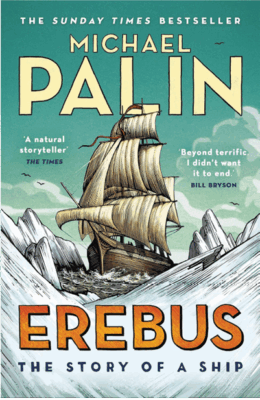

With the forbearance of my kindly editor, I will take a few of these books, search for the common elements and weave a convincing case for you to reach out to Amazon, Alibris or your public library, to find and discover them for yourself.
From M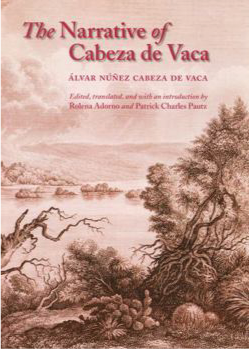

Sometimes it worked out, as in the case of the lone surviving ship and its crew of 30 (out of the original five ships and total crew of 270), though Fernão himself was killed by angry islanders in Cebu (spoiler alert) a mere five months before the crew successfully completed their three-year, 37,500 mile circumnavigation of the Earth. Sometimes it didn’t work out as in the case of the Erebus and Terror whose crews, stranded in the ice for two years, left their ships and died a few at time on barren ice-covered islands, without ever finding the elusive Northwest Passage (Alas, no maps came out of that expedition).
Our shared unquenchable thirst for knowledge and a taste for danger, generated all the exploration and subsequent maps of the western hemisphere. By the way, a great book about the Erebus, despite lacking solid conclusions about the crew’s descent into madness and cannibalism, was recently written by Michael Palin – yes, that Michael Palin (Hutchinson/Random House, 2018).
An obvious starting point would be the exploration of the Americas with Lewis and Clark’s expedition across the wild unknown of our own country. It was well conceived, well-staffed and well documented and serves as part of our American story. Many books have taken the source material, the journals of Meriwether Lewis and William Clark and woven a tale of determination and scholarly intent despite two years of hardship. I will come back to Meri and Will in a moment, but first, let me go back 276 years before Lewis and Clark set out on their voyage, to the year 1528.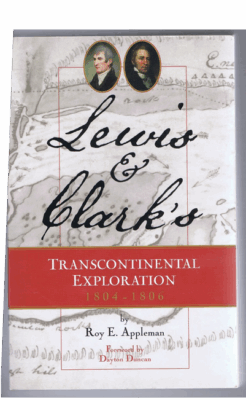

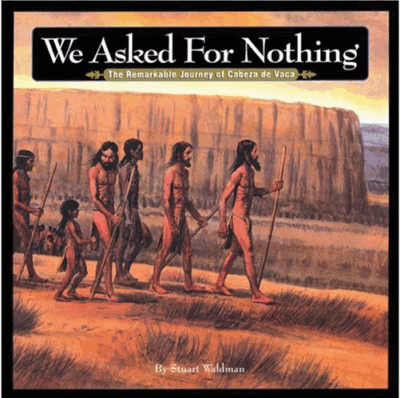
The Spanish sent the ill-conceived, ill-fated, and not well-known Narvaez expedition treasure hunting to what is now Florida. At that time, Cuba and parts of Central America were being explored and colonized (i.e., conquered), but North America, including Florida was Terra Incognita. Narvaez disembarked in force near what is now Tampa Bay, trod inland looking for riches and the troops pretty much all got shot with arrows, ended up starved and sick with swamp fever and decided to head home. Many fewer trudged back out of the swamps but by then their ship was gone. Desperate and disillusioned, they fashioned a series of simple rafts and attempted to sail to Mexico on them. No one had a good map of the Gulf of America (Mexico) back then and they underestimated the distance by a factor of ten. The rafts drifted and separated when they hit the outflowing current of the Mississippi River and only a couple rafts grounded near modern day Galveston, Texas. The rest were gone forever. One small group of survivors led by the expedition’s royal treasurer, Alvar Nunez Cabeza de Vaca, after enduring two years as prisoners of the natives, set out to walk to Mexico City, even though they had no idea where they were or where it was. The four men were in dire straits, but they befriended natives along the way. After four years of wandering, the group actually stumbled into Mexico City. Once repatriated and recovered, Cabeza de Vaca wrote a summary of their trip to the King of Spain. The journal was published and is still available today under a variety of names. The Narrative of Cabeza De Vaca edited by Adorno & Pautz (Univ. of Nebraska Press, 2003) is a good example.
This remar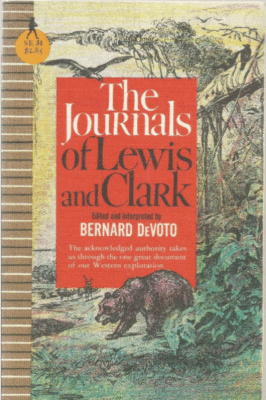

Now, back to Meriwether and William. Though three centuries had passed, the land was still completely wild and just like Cabeza de Vaca and his companions, these intrepid gentlemen found themselves dependent on the goodwill of natives, again and again throughout their trip. They paddled up rivers, hiked through treacherous mountain passes, nearly starved, and dragged themselves those last hard miles to the Pacific Ocean where they camped until they recovered enough to head back home. Their copious notes and documentation of all that they encountered and the maps they drew, which contained plenty of Terra Incognita, cracked open the ‘West’ for everyone that followed and influenced the botanists, biologists, geologists, and anthropologists who came after. They truly merged science and adventure, and their diaries have served repeatedly as the source material for numerous books, hitting a peak around the bicentennial of their journey in 2004. Of the several books written about Lewis and Clark, Roy E. Appleman’s Lewis and Clark’s Transcontinental Exploration (Jefferson National Park Association, 1980) is very good and extremely well-illustrated.
For my money, an older one, by Bernard De Voto, (Houghton Mifflin Co.,1953) is one of the best. De Voto, famous in his own right as a proto conservationist, uses a gentl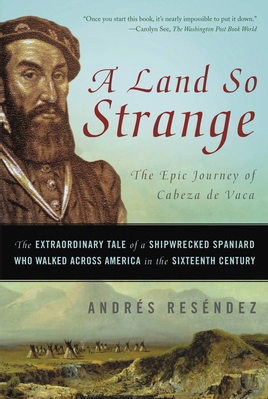

Now let us take
The year is 1541. Orellana is serving as lieutenant to the more savage and cruel Pizarro brother, Gonzalo. Pizarro, whose brother Francisco had conquered and destroyed the Inca a few years before, had decided to search for El Dorado, the “Golden Man,” in the Andes. Eventually the party of 220 Spanish mercenary soldiers, horses, and 4000 native slaves descends into the thick jungle of the Amazon, headwaters to the river of the same name. After desperate times, including attacks by natives, drownings and starvation, Pizarro orders Orellana and 56 companions to continue down the river while he and most of the party turn back.
Pizarro made it back to Peru, just barely, starving and in rags. Meanwhile, for the next year Orellana and his crew floated the entire length of the river basin, which w

I encourage you to read these stories and as many others like them as you can before AI rewrites them all and extinguishes the unique light that is each author’s voice.