Every firm knows the feeling. A job is booked, the client expects a field crew. Then one surveyor calls in sick. Another is stuck finishing a job that ran long. The one person registered to sign off on the report is on leave. Nothing about the work itself has changed, but the schedule slips anyway. The firm’s capacity to deliver was resting on a handful of specific people, not a team that could absorb the gap.
Depth Isn’t the Same as Headcount
It’s easy to conflate “team depth” with simply having more staff, but the two aren’t the same thing. A firm can carry a large payroll and still have a single point of failure at every stage of a job. One senior reviews all the tricky boundary calls, one person knows a particular client’s site history. One registered surveyor can sign what everyone else produces. Adding junior staff under that same bottleneck doesn’t fix it. It just gives the bottleneck more work waiting behind it.

Real depth means overlap in the roles that gate a project. This means more than one registered surveyor able to review and sign. Field staff cross-trained across boundary, detail, and construction work, not locked into one specialty. Enough drafting capacity that a person’s absence doesn’t stall the report queue. It’s a different kind of investment than simply growing headcount.
Why This Keeps Happening to Good Firms
The single-point-of-failure problem isn’t bad luck. It isn’t a sign of a poorly run firm either. It’s structural.
Most surveying practices grow around the strengths of a few key people. That’s how a small firm naturally scales in its early years. The registered surveyor who founded the practice keeps signing everything. The field lead who’s been there longest keeps getting sent to the tricky sites. That works fine until volume grows, or someone is unavailable at the wrong moment. Then the same structure that got the firm this far becomes the thing standing between a client and their schedule.
From a client’s side, none of this internal staffing logic is visible. What they experience is simpler: a job gets re-queued behind other work, a site visit gets pushed back a week because the one available crew is booked solid. A report sits finished but unsigned because the only registered surveyor who reviews that work is out. The client doesn’t see a staffing gap, they see a delay. And it lands on their schedule, not the firm’s.
Depth Without Losing Consistency
A fair objection here is that spreading work across more people risks the opposite problem: inconsistent output. That’s a real risk, but it’s a symptom of depth built without standardization, not an argument against depth itself.
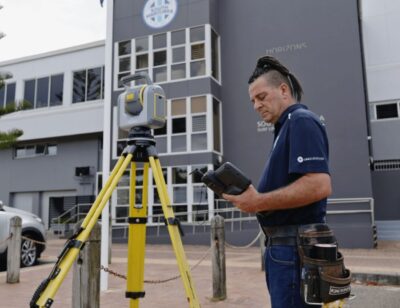
Firms that build real bench strength pair it with a shared process. Any qualified surveyor picking up a job follows the same field procedure, the same QA checks, and the same reporting format as whoever normally handles that account. Done well, redundancy and consistency reinforce each other rather than trading off. The standard is what makes it safe to hand a job to someone other than the usual person.
This also answers a common question about smaller practices: bench depth isn’t purely a function of size. Take a smaller firm with two or three cross-trained surveyors and a shared way of working. It can have more real depth than a larger firm where twenty field staff all report up to the same one or two people. Depth is about how a firm is structured, not how many names are on the payroll.
Building Depth Without Bloating Cost
Carrying redundant capacity sounds expensive. During a slow quarter, it can feel like paying for capacity that’s sitting idle. In practice, firms manage this through cross-training rather than over-hiring.
A detail surveyor also runs boundary jobs. A field lead gets brought up to speed on 3D capture. More than one person is qualified to review and sign, so registration authority isn’t concentrated in one individual. That approach spreads capability across the existing team rather than adding pure headcount. It keeps the cost of depth closer to the cost of training than the cost of a second full crew.
It also doesn’t disappear when a job changes hands. Handing a job to a different surveyor mid-project only works if site notes, prior measurements, and client context are documented and accessible. They can’t just live in one person’s head. Firms that treat that documentation as part of the job, not an afterthought, are the ones where a handoff costs the client nothing they’d notice.
What This Looks Like From the Outside
A client can’t audit a firm’s internal staffing model. What a client can observe is simpler: does this firm still hit its dates when something on their end goes wrong? A firm with real bench strength answers yes more consistently than one running on a handful of people.
That holds whether the job is a small residential boundary check or a large commercial site, because the underlying exposure to a single unavailable person is the same either way. That track record, not a claim about team size, is the real evidence worth asking a firm for. It’s usually easy enough to check: just ask how a firm handled its last few unplanned staffing gaps.
More firms are treating this as a deliberate structural choice, not something that just happens to emerge at scale. Being a surveying team built for depth is different from simply having enough people on a given week. Increasingly, it’s the difference clients notice most, even if they’ve never used those words for it.
C&A Surveyors has built exactly this kind of depth across more than a decade in the field. With 25-plus expert surveyors on staff, no single person’s schedule determines a client’s timeline.