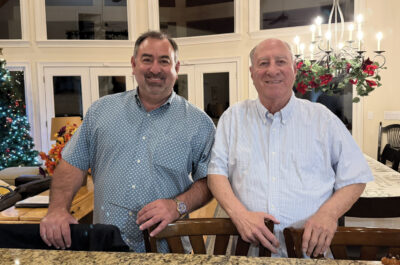
I’ve spent thousands of hours riding in a survey truck beside my father, but these days I find myself noticing the passenger seat more than ever. At eighty years old, he still climbs in with the same purpose and sharpness he’s had since the day I was born. He sits there, ready for the next job, the next question, the next boundary puzzle we’ll solve together.
What I didn’t realize until recently is that the passenger seat wasn’t just where he rode, it was where he quietly taught me how to become the man and professional I am today.
I never planned to follow in his footsteps. In fact, I ran in the opposite direction.
Two Paths: Wall Street and the Field
My father, John L. Failla, has been a surveyor for as long as I can remember. We lived in Nebraska. He was a Registered Land Surveyor there, as well as all 6 surrounding states. His eighth registration was in Pennsylvania. My childhood memories include yellow field books with smudged pencil lines, transits, plumb bobs, drafting tables, the smell of ammonia next to the blueline machine, and stories about boundary disputes that sounded more like courtroom dramas than technical work. To him, surveying wasn’t just a job as much as it was a calling rooted in law, logic, and old-fashioned integrity.
But I never imagined myself joining the profession. I grew up hearing that the exam was “next to impossible,” and I wanted nothing to do with spending long days in briars, poison ivy, and what seemed like frigid temperatures in Nebraska for 9 months only to resemble Hades in June, July, and August. My career ambitions pointed toward financial success and the fast pace of Wall Street, not property lines in the woods.
So, after college, that’s where I went.
From 1989 until October 2001, I built a career in the brokerage business, eventually becoming Executive Vice President and Regional Manager for a large brokerage firm in New York City. My schedule had a rhythm: one week every month at the Marriott World Trade Center, the other three covering my territory across the Southeast. It was fast, intense, and at the time, exactly what I wanted.
And then the world changed.
Shortly after 9/11, my level of management was eliminated. Everything I had built suddenly evaporated. When I told my father, he responded with the kind of blunt wisdom only he could deliver:
“You should have been a surveyor.”
I didn’t know it then, but that sentence would redirect the rest of my life.
Returning to the Profession — On His Terms
Coming back to surveying felt like stepping into a world I had always known but never truly seen or understood at a meaningful level. My father had migrated from Nebraska to the southeast and was operating a small land surveying firm just north of Atlanta. He didn’t ease me into the profession. He didn’t offer long speeches about legacy or pride. What he offered was far more effective: work, expectations, and an unapologetically high standard.
His teaching style was unmistakable:
- Minimal praise
- Maximum critique
- Zero shortcuts
If you did something wrong, he told you; and he told you exactly why it was wrong. But embedded in that criticism were lessons that shaped my entire approach to the profession.
More than anything, he taught me that surveying is fundamentally a legal discipline. It’s not just measuring; it’s interpreting. It’s resolving intent, understanding history, evaluating evidence, exhausting all levels of research; all resulting in making judgment calls that carry real life consequences.
And with that came his greatest repeated warning:
“Don’t take on something you’re not fully equipped to handle. Liability doesn’t care about good intentions.”
That lesson has guided my career more than any piece of technical knowledge.
The Silent Mentor
As sons, we spend our lives hoping for one thing: to make our fathers proud. But my father is from a generation that didn’t express pride in words. If he felt it, it wasn’t something he verbalized.
Instead, he showed it differently.
He showed it when he handed me complex boundary problems and trusted I could resolve them.
He showed it when he let me make judgment calls in the field without correcting me.
He showed it when he asked my opinion, genuinely, on complex legal questions.
It took me years to realize that this was his version of saying, “I’m proud of you.”
Not in words, but in trust.
Old School Meets New Tech
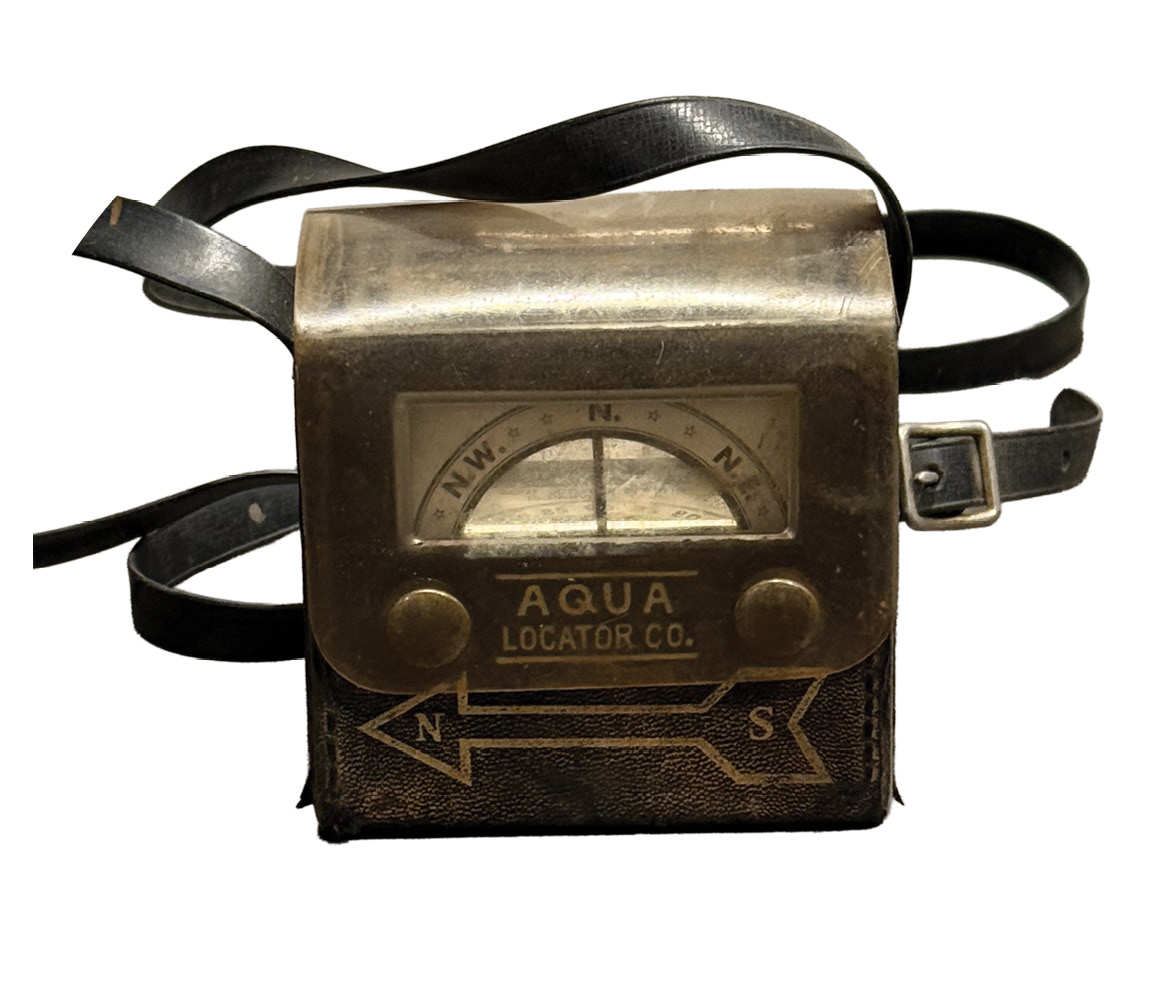
Surveying has evolved more in the last twenty years than in the previous hundred. My father’s career began with chains, transits, hand calculations, and courthouse research done with dusty index cards and old, cumbersome plat books that held all the secrets. He had tremendous confidence in that magnetic “dip needle” when locating iron pins. To this day I have never actually seen that little black box actually locate a property corner. My career has unfolded with reflectorless Total Stations, GPS, robotics, drones, GIS databases, and digital everything.
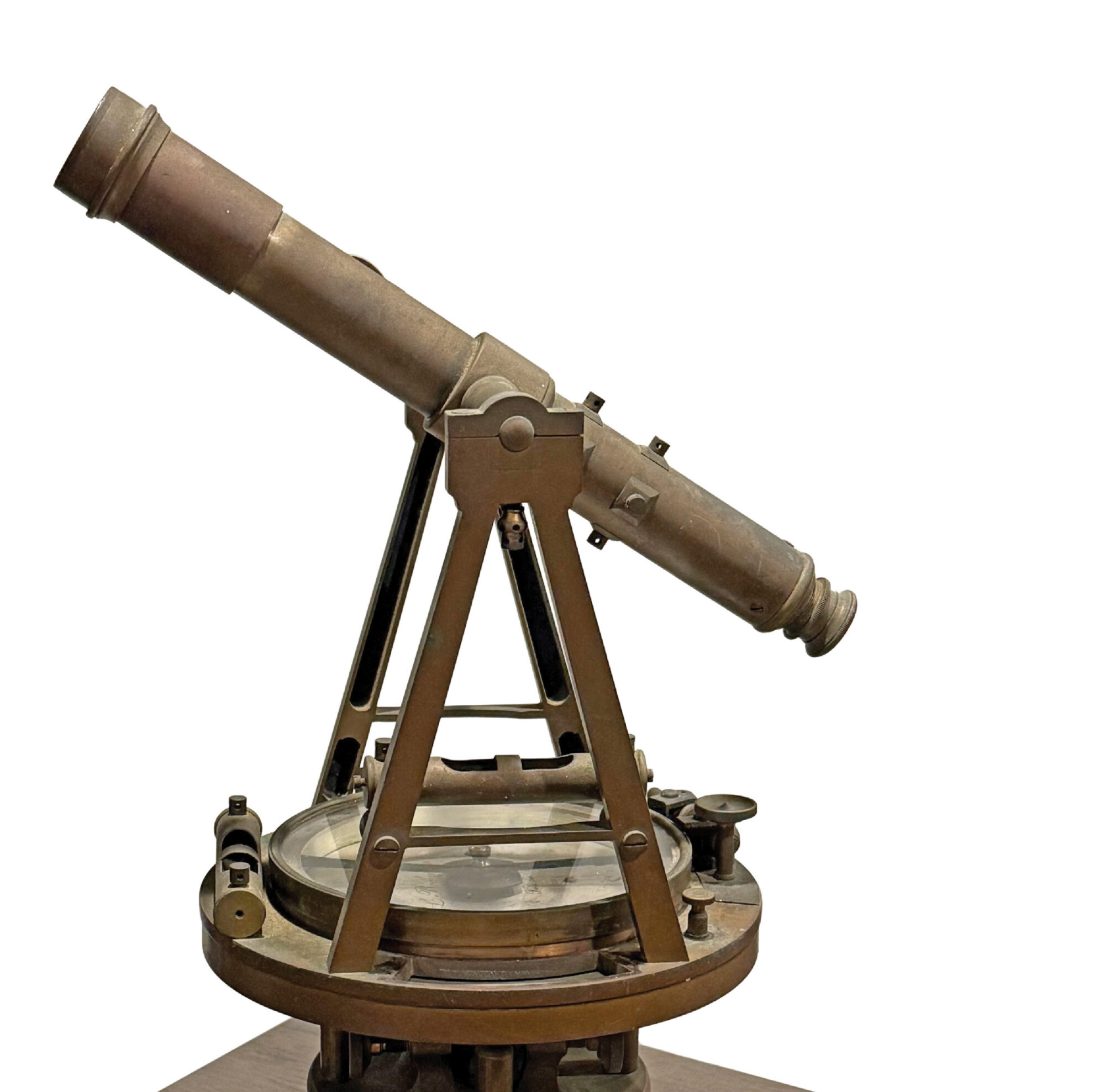
Many surveyors from his generation never adapted. They became obsolete not because they lacked intelligence, but because they refused to adjust. After all, why change something that has worked so well for many years?
He didn’t love the new technology, but he respected its value enough to embrace it just enough to stay relevant. And he recognized something profound:
Technology can help a surveyor, but it cannot replace judgment.
Boundary law, interpretation, locating a stone set by original surveyors in the early 1800’s, and most importantly, professional discretion; those are timeless, and will never be challenged by a new gadget or AI.
Becoming the Expert
Today, my own career reflects his influence in ways I never expected. Like him, I gravitated toward retracement surveying and boundary disputes; the very heart of where surveying intersects law. I now work with multiple attorneys who rely on me to resolve conflicts, prepare exhibits, and provide expert testimony.
Every time I walk into a courtroom, sit down to draft a legal exhibit, or stake a property line between feuding neighbors, I hear his voice reminding me:
- Stick to the evidence
- Respect the law
- Never guess
- Never stretch beyond your expertise
- And above all: be honest
Those principles shaped his reputation. They now shape mine.
Field Days With an 80-Year-Old Surveyor
We still work together every other week or so. His body is slower, but his mind? Sharp as ever. Some days he sees things before I do.
And those rides in the truck. Those simple, ordinary rides have become my favorite part of the job.
That passenger seat has been a classroom for decades. It’s held boundary theories, professional arguments, case studies, too many old family stories, and some truly world-class critiques. It’s where he taught me how to think like a surveyor and, more importantly, how to think like him.
And it’s also where he reminds me every single time that I apparently still don’t know how to check for traffic coming from the right when making a left turn.
His play-by-play is as reliable as the sunrise:
“It’s okay right. Still okay for a block and a half. Yeah…you better wait.”
I’ve been driving for decades. It doesn’t matter. There will always be commentary. And honestly, I’d miss it if it stopped.
I know these days are numbered. One day the truck will be quieter, and the passenger seat will be empty. That thought hits harder than I ever expected, realizing that you never know the true value of a moment until it becomes a memory.
Surveying didn’t just give me a career. It gave me time with my father. It gave us a relationship we might never have otherwise built. It gave me a mentor in the truest sense of the word.
And every time I resolve a boundary dispute, issue an opinion, testify in a courtroom, or scribble my signature across my seal, I’m carrying forward the lessons of the man who taught me everything. Not by telling me, but by showing me.
One day the passenger seat will be empty. But his influence will still ride with me. Every mile. Every job. Every line I draw. And of course, every left turn.
Anthony P. Failla, PS, is a second-generation Professional Land Surveyor in Georgia and North Carolina with more than 20 years of experience specializing in boundary disputes, forensic surveying analysis, and expert-witness testimony. He is the owner of Accurate Surveying and Planning, Inc., and certified by the Georgia Soil and Water Conservation Commission as a Level II Design Professional.