Loomis stated that Heidecke had introduced him to a number of residents of Detroit and that he obtained affidavits from L. Jacobs, the store keeper, and other citizens of the place, certifying to an acquaintance with all 12 homesteaders, and setting forth how they had seen them a number of times during the past 8 years, as they went to and from their claims. It has always been a mystery to me how Heidecke ever got those people to make such affidavits as that, unless he hypnotized them, as there was not one word of truth in anything they swore to!”

Figure 1. Teddy Roosevelt, delivering a rear-platform speech with Binger Hermann, Land Commissioner, in Washington, D.C. in 1905.
Some months later, “lookout Tarply” informed Puter that he had heard, through Merritt Ormsby, a son of Captain Salmon B. Ormsby, Superintendent of the Cascade Forest Reserve, that the Commissioner of the General Land Office had instructed his father to go up into Township “11-7” and make an examination of the improvements and cultivation of these 12 homesteaders, and to ascertain, through affidavits of disinterested persons living nearby, as to what they knew of the homesteaders, together with their improvements and residence on the claims.
Puter then went to the Wells Fargo Bank of Portland, Oregon and purchased a draft for $500 and then endorsed it to Merritt, and told him that “if he could induce his father to go at once into Township “11-7”, and make an examination of those 12 homestead claims and return a favorable report thereon, I would pay him $500 as soon as the patents issued. He promised to see his father right away, and the next day informed me had had a talk with the old gentleman, who had consented to go on the trip without delay…
At this time it was about the middle of January, 1902, and the snow was at least six feet deep over the entire township…Some 2 or 3 weeks later I met young Ormsby in Salem and was informed that his father had made out his report and had forwarded the same to Washington D.C.” Puter then consulted with his attorney, F. Pierce Mays, in Portland, and what he had to say about the matter. Mays said a good plan for me would be to go back to Washington, D.C. and see US Senator John H. Mitchell, and to get him to help me out.”
On March 1st, Puter called on Mays again to ask him to compose a letter to Senator Mitchell, telling him how important it was that the patents issue without delay, and that I would certainly make it all right with him. The next day Puter was on his way to Washington D.C., letter in hand. He arrived at the Capitol city on February 28th, 1902, and then called on Senator Mitchell and delivered May’s letter. After the Senator read the letter and heard what Puter had to say, he said that he was very busy that afternoon, but if he could come around the next morning at 9:30, he would see what could be done.
The next day at the appointed time, Puter called at Senator Mitchell’s rooms and went into all the details about the 12 claims, insofar as it might appear as a legitimate transaction, telling him that if he could devote a little of his valuable time to my case, and secure for me the issuance of patents, I would pay him well for his trouble. Senator Mitchell then evinced a willingness to do all he could for me. We then took a carriage and drove up to the Land Department for the purpose of seeing Commissioner Binger Herman. (see Figure 1)
After exchanging greetings all around, the Senator asked Mr. Herman for the status of the 12 claims. Mr. Herman then asked one of the clerks for the status of the entries. About 15 minutes later the clerk reappeared and stated that the reports had been received and that they were all favorable, but it would be several months before they could be acted upon, as they would have to come up in their regular order! Puter then said, “Now Senator, delays are dangerous as I have $8,000 tied up in these lands, and I can’t afford to lose that amount.” Puter then pulled two $1000 bills out of his pocket and placed them on the table in front of Senator Mitchell, with the remark that he considered his services well worth that amount. The Senator then said: “Mr. Putor, you cannot afford to pay me such an amount like this,” at the same time picking up one of the bills and pushing the other back to Putor. Putor tossed the other bill back across the table to him and replied: “Senator, I insist on your taking this money; your services are well worth it in this case.”
Several days later, Senator Mitchell told Putor that he had met with Commissioner Hermann who told him that he found everything all right and had decided to issue the patents. Several days later, Puter returned to Portland, Oregon where the 12 patents were waiting for him. Some days later, he met with Frederick A. Kribs, the financial agent of C. A. Smith, a millionaire lumberman of Minneapolis, Minnesota. I informed him that patents had been issued for the 12 claims in Township 7-11. Mr. Kribs was glad to hear that the title had been made clear, as he now had an opportunity to select 12 quarter sections of extra fine timber land in lieu of Puter’s 12 claims. He called upon Kribs a few days later and collected a check from Kribs for $10,080, which was at the rate of $5.25 per acre.
Putor then moved on to “greener pastures” and soon started to “locate settlers” in the relatively dryer and flatter ground of eastern Oregon, west of the Cascade Mountains. A rather humorous episode occurred as he was driving a horse drawn wagon from Prineville to Bend, some 80 miles to the southwest. Along the way, he encountered another fellow, parked along the road. Fred Kribs had warned him that if he encountered a tall, gaunt individual with Billy goat whiskers, with iron-grey hair and a castor oil smile, who looks like a cross between a Kentucky colonel and a wandering minstrel, just clear the track and hold onto something, because you are standing in the awful presence of Colonel A.R. Green, the renowned Government sleuth.
“Did you see any stray sheep as you came along the road” Puter inquired, assuming the aspect of a typical “rube”? “No,” answered Colonel A.R. Green, majestically, “and besides, I am not seeking to corral that kind of animals. It is two legged beasts of prey of the land grabbing that I am after, sir, and if you know of any bell-weathers of that class, just trot them out, because they are my game.” Puter goes on to say, “at this he swelled up with as much importance of a bullfrog, until I almost thought there would have to be an explosion in order to relieve the pompous congestion. I realized at once that he mistook me for a sheepherder and encouraged him in the belief. He proved to be a voluble conversationalist, an in almost less time than it takes to describe it here, Colonel Green had imparted the whole secret of his mission, laying particular stress upon the fact that immense frauds were being committed against the Government and wound up his tirade against everything land-grabical by asking me point blank if I knew a person by the name of S.A.D. Puter.” Puter replied “Putor — Putor — he repeated quizzically, appears to me that name sounds familiar. Who does he herd sheep for?” Colonel Green replies: “Herd sheep be d—d” fairly snorted the Colonel. “He herds ‘dummies’ up here in the woods and shears these forests of their pristine grandeur. Why sir, a pine tree out here alone isn’t any safer in that man’s hands than a virtuous maiden in the harem of a Sultan.”
Ever since January 1902, when Puter started bribing Federal officials, the U.S Attorneys in D.C began to pay attention to the “goings on” between public employees and private parties. Various government lawyers were enlisted to gather information that could be used at trial, the first one being scheduled for late November of 1904 in Portland, Oregon in the U.S. District Court. The federal attorney that would represent the United States was Francis J. Heney, whom Puter was well aware of and respected. Heney was a master debater and judge of human character. Over the course of several weeks, he called about 20 people to the stand who purported to be settlers in Township 11-7. Each one testified as to their improvements on the claims. All of them had been “coached” by Putor and his cohorts as to what to say on the stand.
A typical “settler” was a fellow named name Frank H. Walgamot, (see Figure 2) who claimed that he had built a home in October, 1892; that the house was a good one, made of logs, and 16×25, that he had constructed a good road leading thereto, an had also erected comfortable outbuildings, all of which he was pleased to value at $500. Through the hot and dusty summer months, Walgamot, who was a young dentist of Portland, with hands of such snowy whiteness as to indicate that he had never been guilty if any hard work, had declared that he earned a living in the harvest fields of the Willamette Valley, and during the winter had trapped wild animals while he made his mountain fastness his home. This recital brought forth considerable merriment from the crowd and resulted in the stylish young dentist being given the sobriquet of “Leather Stocking.”
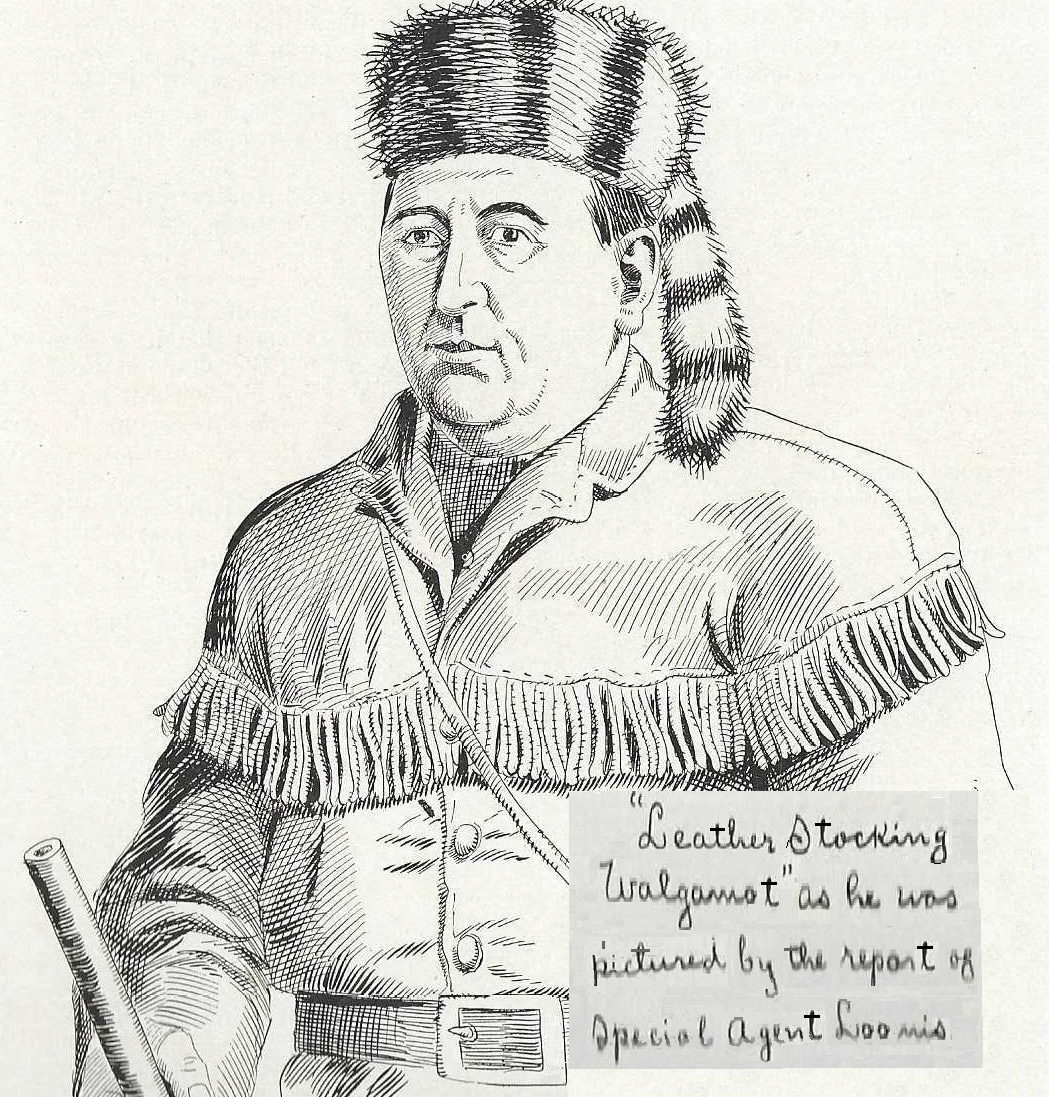
Figure 2.
A.W. Barber’s testimony relative to the Walgamot land was similar in general characteristics to that in connection with the other claims: “There was no evidence to indicate that anybody had ever resided on the place or even slept there overnight.” (Amherst W. Barber was the Government surveyor who inspected and approved the survey of T11S, R7E by William Bushey in 1900. See The American Surveyor, Winter, 2025; “The Sixth Time’s a Charm”)
In addition, John D. Daly, the U.S. Surveyor-General for Oregon, told how he had lived for a number of years, during the summer months, on his claim in Section 15, Township 11-7, which he referred to as his mountain resort, and that the Minto Trail, the only one in the township, and over which would come all the travel, ran through his claim and directly in front of his cabin. He said his claim was located on a small prairie, where he had “squatted” some 12 years previously, in the hope that the Corvallis & Eastern railroad would eventually run through there and his location would make a good site for a station.
In all this time he had neither seen nor heard of the alleged homesteaders. There are three 160-acre claims shown in Sections 10, 15, and 22. Those 3 are the only legitimate claims in the township, being Don Carlos Smith, John Daly, and Patrick Colbert. All the others are fictional. (see Figure 3) On December 6, 1904, after all the attorneys on each side had examined and cross-examined the defendants, Judge Bellinger began reading his instructions to the jury. After being out for about forty minutes, the jury returned a verdict of guilty against all the defendants.
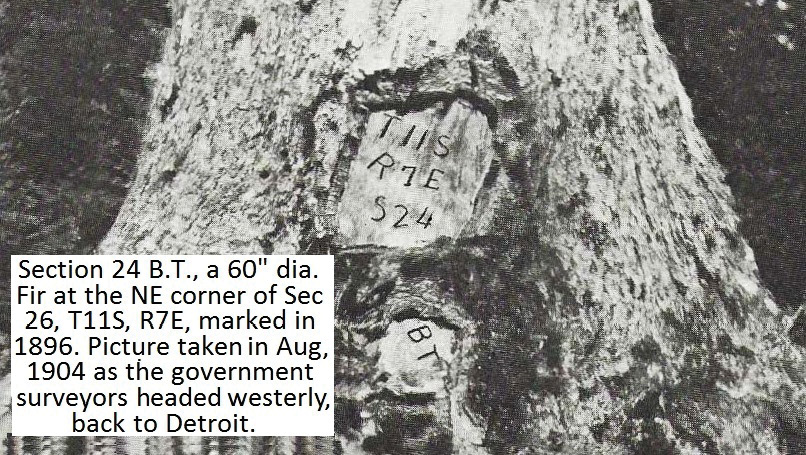
Figure 3.
Puter and some of his co-conspirators were in and out of court for several more years. Finally on July 6, 1906, U.S. District Judge Charles E. Wolverton sentenced Puter to 2 years in the Rocky Butte Jail in Portland, OR., and to pay a fine of $7,500. Through the intercession of Francis J. Heney, President Roosevelt granted Putor a pardon on December 31, 1907. The official document containing the act of executive clemency reached Putor on January 6, 1908, and he walked forth a free man on his 51st birthday.
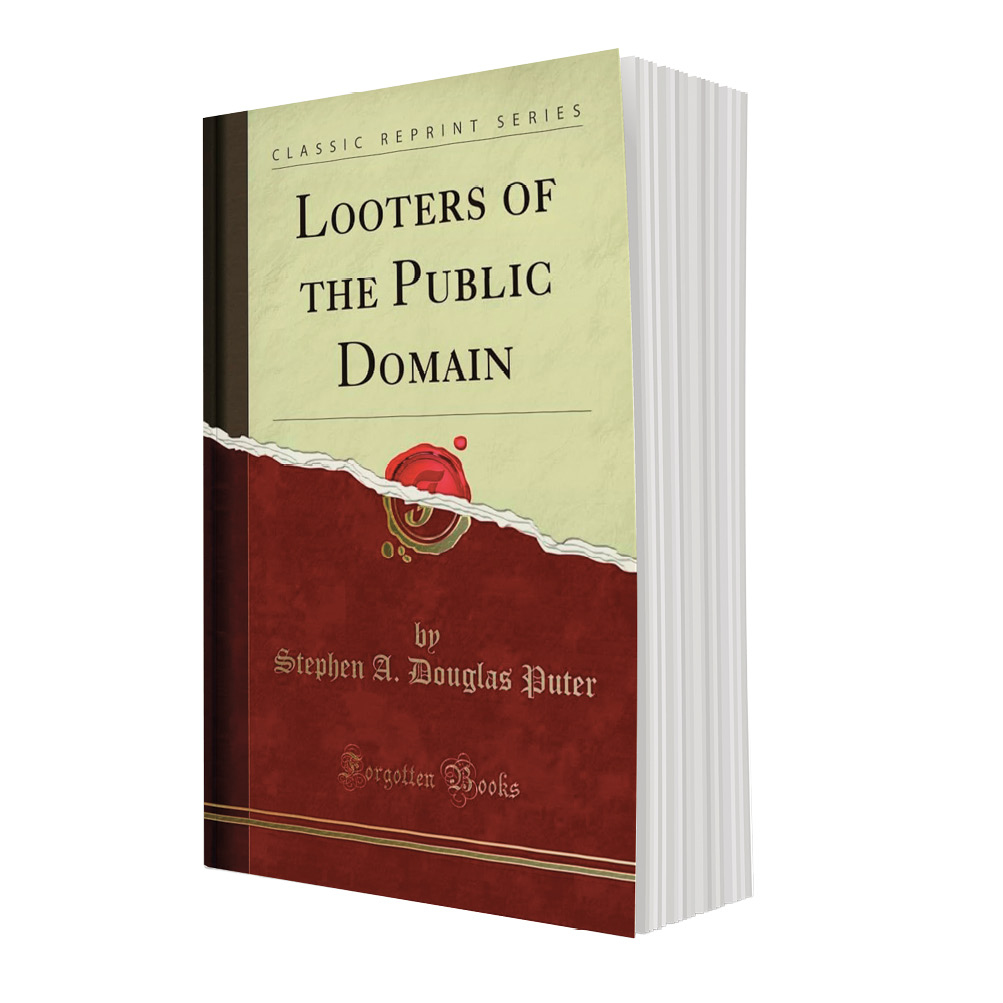
All of the information in the above story is taken from a book of 494 pages written by Putor appropriately named “Looters of the Public Domain”, published in 1907. Beside the text, it also contains about 150 illustrations of people and places mentioned in the book. All of the pictures in “The Rest of the Story” were taken from Putor’s book. It is rare to see a picture of a “bearing tree” only 8 years after it was scribed. (see Figure 4) Usually, we surveyors are looking for corner evidence that is at least 100 years of age or more, after it was first set and referenced.
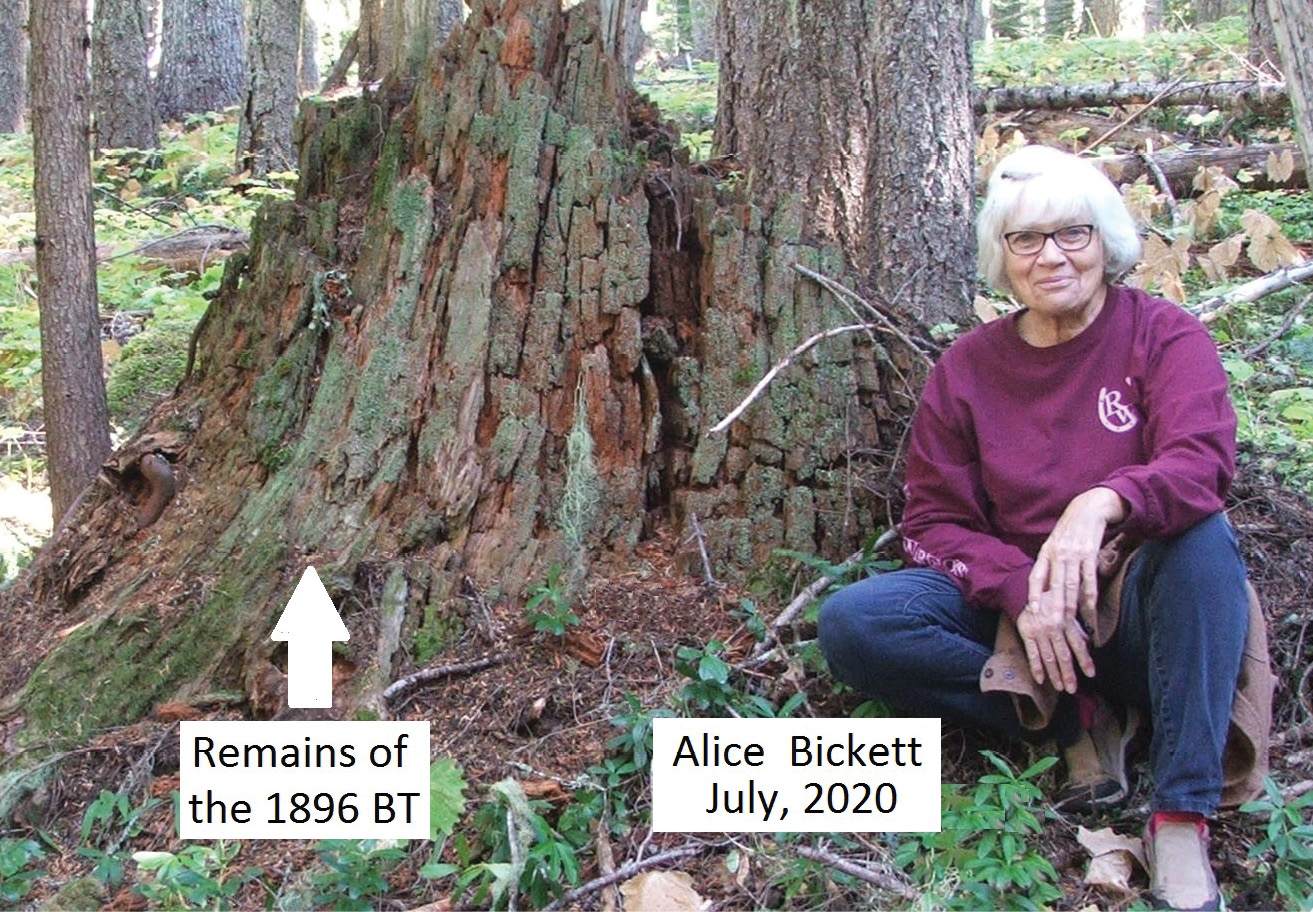
Figure 4.
In “The Sixth Time is a Charm” I mentioned that after retirement, I started to get coordinates on all the corners in T11S, R7E, using mostly family members, including my wife Sharon who was definitely not afraid to get her hands dirty, whether it was planting flowers at home, or digging up 1890 GLO corners in the woods. Sadly, she passed away in 2017 after almost 51 years of a wonderful marriage. In 2019 I started to have my high school friend, Alice Bickett, help me find and monument the remainder of the 11-7 corners. (see Figure 5) She was also not afraid to get her hands dirty, whether it was from some of her horses or dogs or digging up GLO corners with me.
Alice was previously mentioned in the “Twice Told Tales” article in The American Surveyor, Jan/Feb 2022 issue. I plan to prepare a map of the township, showing the actual bearings and distances around each section. That data will be to the nearest minute in bearing (“grid”), and nearest foot in distance (“grid”). (We aren’t building a piano here.!) Theta in T11S, R7E is about 1 degree so one only has to rotate the grid bearing 1 degree right to determine the true bearing. The Linn County Surveyor, Tom Casey, offered to file the above map for future surveyors to use.
C. E. “Chuck” Whitten graduated from Santiam High School in Mill City, Oregon in 1963. He then attended Oregon State University and graduated in Forest Engineering in 1967. He and his wife Sharon moved to Vancouver, Washington where he then went to work for the Washington Department of Natural Resources, working on road location and surveying for timber sales. In 1972, he joined Hagedorn, Inc, a private surveying and engineering firm in Vancouver. In 1973, Sharon and I bought a 5-acre parcel in the woods several miles east of Battle Ground, WA. In 1975, we began building our own home there on weekends and holidays, finally moving in 1978. We had a lot of help from 2 other OSU Forest Engineers who had previously built their own houses. I had helped them which taught me a lot about what to do and not to do. In 2009, I retired as Vice-president of Hagedorn, Inc. which now gave us time to work around our house in the woods. We did a lot of backpacking with our two boys in the Cascades, mainly around Mt. Jefferson, the Three Sisters, and even Mt. St. Helens before she blew her top. Sadly, my wife Sharon passed away in 2017, and I spend most of my time now working on our “claim”.